Can technology save us from an ecological apocalypse? - interview
As the world celebrates Earth Day, I sat down with one expert to discuss whether technological advancements can help us protect our environment or whether it’s at the core of all ecological problems.

Image by Cybernews

 Follow us
As the world celebrates Earth Day, I decided to sit down with one expert to discuss whether technological advancements can help us protect our environment or whether it’s at the core of all ecological problems.
Earth Day is celebrated annually to honor the achievements of the environmental movement and to raise awareness of the need to protect Earth’s natural resources for future generations.
Today’s reality is that the world’s temperature continues to rise at a concerning rate, plastic waste is still ineffectively recycled, and deforestation threatens biodiversity. However, it's not all doom and gloom, and in some cases, these new technologies are helping out.
For example, Internet of Things (IoT) powered smart grids are already helping produce and distribute electricity more efficiently, reducing our overall carbon footprint. Environmentally sustainable smart cities are being constructed with the help of artificial intelligence (AI), IoT, and big data. AI can now analyze data from drones, infrared cameras, and audio sensors to help detect poachers, and satellite imagery helps spot and calculate deforestation rates.
Does this mean that we still have hope? Can technological advancements help fight the ecological zeitgeist? We discussed these future scenarios with Eugene Berko, Director of Tech Practices at Intellias, the IT company leading the charge in implementing digital solutions to increase sustainability.





Berko works for a multinational company that has collaborated with Marvel Fusion, a company developing laser-driven fusion as a solution for the global energy transition to zero carbon emissions, a smart city project in the Middle East, and created systems for businesses to track their carbon footprint and solutions for smart agriculture.

Technology helps to optimize resources
Employing disruptive technologies such as AI and smart devices primarily assists in a quest for a more sustainable future by optimizing the usage of resources.
“Originally, optimization was driven by monetary reasons — more effective energy distribution means less overhead, cheaper costs, and so on. But recently, more and more companies are thinking about the environmental impact. And I think that's great,”explains Berko.
Data gathered by smart devices and processed using AI models can tailor energy production, storage, and distribution to consumption while helping to reduce our carbon footprint. For example, so-called smart grids—an enhanced electric grid with the help of IoT devices that communicate both ways are helping to manage the demand.
Smart home technologies are also contributing to reducing energy consumption.
“Power is used whenever needed, and instead of people like me just going through the apartment and turning off the lights, saying to my daughter, why did you leave the light on, there are automated systems that do that way more efficiently,” says Berko.
Optimization of consumption also applies to food waste reduction. “Many companies are experimenting with AI and machine learning (ML) to optimize food distribution to minimize waste by providing optimal routes to avoid spoilage,” explains Berko.
Smart solutions in the agricultural sector can reduce environmental impact by monitoring plant growth and quality of soil, optimizing irrigation, and dosing agrochemicals. This technology can even help track the health and condition of livestock.
Technology can also play an important role in preserving wildlife – tracking the movements of individual animals or herds to ensure they are not going into the cities or densely populated areas
“You can use drone surveillance to prevent poaching, track the health of those animals, and make sure that they get information about the environment so they are in a safe environment,” Berko points out.

Data empowers us to see the impact
Another way technology contributes to solving ecological problems is by providing accurate and extensive data. Data gathered by smart devices and processed by various computational systems helps to see the actual environmental impact, contributing to its preservation.
“The changes made in the last several hundred years were unseen previously. Tracking those things is extremely important,”Berko highlights.
While world economies are trying to tackle the upcoming climate change apocalypse by reducing their carbon footprint, accurate calculation is crucial. New technologies are helping in this field. For example, the Intellias analytics platform integrated into a transportation company’s management system can show carbon emission statistics in real-time to help fleets offset their CO2 footprint.
“I think it's very good for companies to focus on their nearest future, really getting a better understanding of what's happening with us, our planet, and how we are contributing to that. How are we affecting this?”says Berko.
“In that way, the companies can start having more responsibility for their actions, understand what they are doing, understand the impact, and then take responsibility for that.”
Flipside of the coin
While there are some obvious perks, technology is like a double-sided sword. We can calculate our carbon footprint, however, at its essence, climate change is caused by man-made technologies.
While AI models can process tremendous amounts of data, they also consume a lot of energy, increasing their carbon footprint. Blockchain technology is disruptive in tracking carbon emissions, but yet again, the network is highly energy-hungry.
“It's like with nuclear energy. You can use it to provide clean energy for the people. On the other hand, it can be used to produce bombs. So it's really about what we as a society are doing with that technology,”Berko states.
Berko points out that energy consumption is a very complex problem with many variables. He does not distinguish AI from other IT services, such as Google services, which also consume high amounts of energy. “There are a couple of questions to be asked here. Can we really avoid using this technology? Are there alternatives?” he asks. If the advantages outweigh the disadvantages, bearing the cost is more likely.
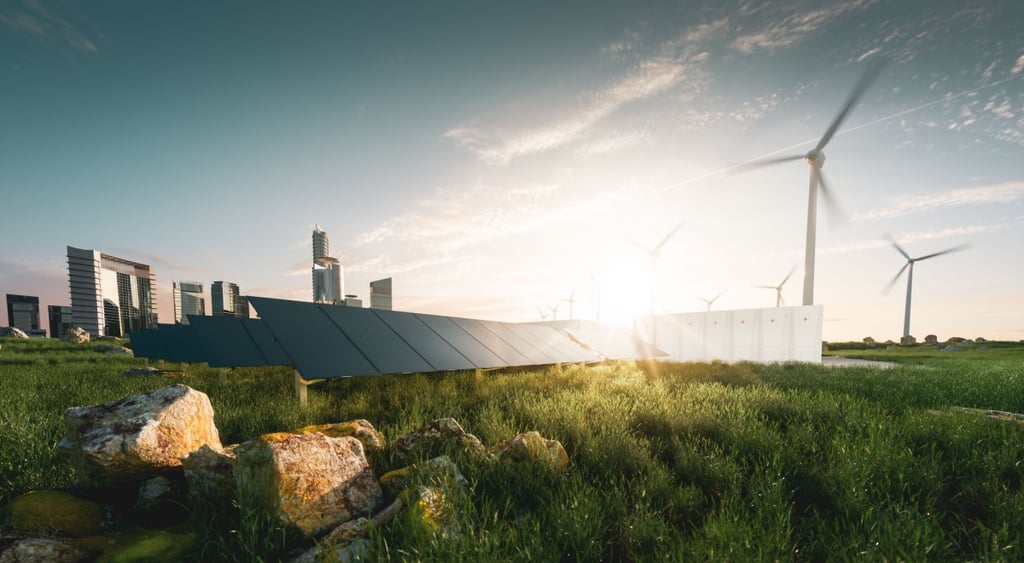
Also, the source of energy is important. If energy is created using fossil fuels, it will, of course, increase our overall carbon footprint. However, cleaner and renewable energy solutions – like wind or solar power, change the dynamics.
Berko also highlights the evolution of technology and that it tends to get more energy-efficient over time. “If you take processors in our computers, they started using more energy with time compared to the 90s, and the performance increased so much. That means we are doing way better. Previously we had to have X amount of PCs doing the work, and now we need a significantly smaller amount of that. I am a bit on the optimistic side, I guess,” he says.
Another argument is how technology is used. Technology could be used purely for entertainment purposes, but it could also serve a higher purpose: to save lives and improve human living conditions.
Staying tech-curious
So what is there for us in the future? Berko believes it is hard to predict, as the history of humanity shows that predictions are rarely accurate.
Berko suggests that if one were to engage in conversation with an individual from the early 1900s, it's unlikely that they could have anticipated the vast array of socio-economic transformations that unfolded over the course of the 20th century.
“That person would not be able to predict two world wars, the dismantling of empires that had existed for hundreds of years, and the emergence of the Soviet Union. That person would definitely not be able to predict technological advances, commercial flights, personal computers, or the Internet,”he explains.
While predictions for further technological advancements are hard to narrow down, Berko invites us to stay realistic but hope for the best. We as a species can mitigate the risks while still having the best technology can provide.
He points to the invention of cars, which completely disrupted how our society functions by transforming the concept of distances and connecting people. “Of course, as a downside, cars produce CO2 emissions, and there are accidents on the road.”
Despite the downside, cars can now be made with hybrids or electric engines to reduce their carbon footprint while still having all the benefits of bridging society. So, while new technology brings risks, there is always potential to manage them for the common benefit.
“Based on our previous history, I have a lot of hope in humanity. I try to be realistic but maintain hope that if things get tough, we will hopefully work it out,”concludes Berko.